Source Black Digital Thermo Hygrometer for Home, Lab, and Warehouse
Find a black digital thermo hygrometer for industrial and household use. Compare 30 models with varying accuracy, temperature ranges, and humidity sensors. Source reliable monitoring devices from verified manufacturers in China; compare the available evidence and request quotations based on your requirements.
Key considerations
Products List




Comprehensive Sourcing Guide
Black Digital Thermo Hygrometer Sourcing Guide
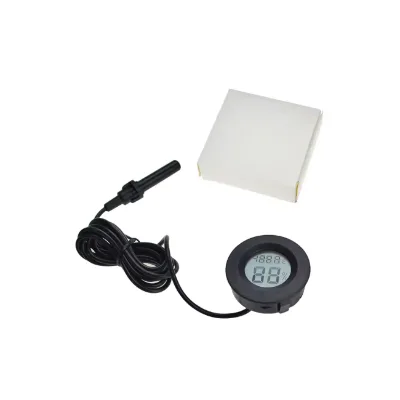
Procuring black digital thermo hygrometers requires a clear understanding of the diverse specifications available in the current market. Buyers must navigate a wide range of product models, such as the DT-89, HTC-1, and LDTH-520, each offering distinct features tailored to specific industrial or household needs. The observed listing signals indicate a significant variation in accuracy, with some devices claiming precision as tight as ±0.5°C while others operate at ±1°C or even ≥2°C. This disparity necessitates a rigorous verification process to ensure the selected device meets the precise environmental monitoring requirements of your facility or retail offering.
The physical attributes and packaging options also vary considerably across suppliers, influencing both logistics and end-user experience. Products are available in various form factors, from compact units measuring 1069822mm to larger industrial-grade monitors. Packaging ranges from simple OPP bags and white boxes to customized color boxes and cartons, with some suppliers offering fully bespoke packaging solutions. Understanding these variations is crucial for aligning the product with your brand identity and ensuring that the packaging provides adequate protection during transit, especially when dealing with fragile digital components and sensitive sensors.
Product Scope and Observed Listing Signals
The market for black digital thermo hygrometers encompasses a broad spectrum of devices designed for both industrial and household applications. Observed listings reveal a price range from $0.18 to $381, reflecting the vast differences in build quality, sensor technology, and additional features. Minimum order quantities (MOQs) typically range from 1 to 500 pieces, allowing for flexibility in procurement strategies, whether for small-scale testing or large-volume distribution. Buyers should note that while some models are marketed for home use, others are explicitly designed for industrial environments, requiring more robust construction and higher accuracy standards.
Key product attributes observed include digital displays, thermocouple materials, and optical measurement technologies, indicating a mix of traditional and advanced sensing methods. The measuring temperature ranges generally span from -50°C to 70°C (-58°F to 158°F), with humidity ranges varying from 10% Rh to 99% Rh. Some models specify narrower humidity ranges, such as 25% to 98% Rh, which may be suitable for specific controlled environments. Additionally, power supply options like 2*1.5V AA batteries are common, ensuring ease of use and maintenance. These signals help buyers identify products that align with their specific operational requirements and budget constraints.
Technical Specifications to Verify
When evaluating technical specifications, accuracy is a primary concern for buyers. Devices may claim accuracies of 1°C, ≤0.5°C, or ±1°C, with some even specifying ≥2°C for less critical applications. It is essential to verify the humidity accuracy as well, with some models offering 5% accuracy. The measuring ranges are critical, with temperature spans typically covering -50°C to 70°C and humidity levels from 10% to 99% Rh. Buyers should confirm these ranges against their specific environmental monitoring needs to ensure the device can operate effectively within the expected conditions.
Physical dimensions and packaging standards also play a significant role in the selection process. Models like the DT-89 and HTC-1 have specific standard dimensions, such as 530230290 mm and 643932cm respectively, which impact storage and display options. Packaging types vary from cartons to color boxes, with some suppliers offering customized solutions. Additionally, the inclusion of accessories like batteries and the type of hygrometer, whether dry and wet bulb or hair hygrometer, should be verified. These details ensure that the product fits seamlessly into your existing infrastructure and meets user expectations for functionality and convenience.
Compliance and Safety Documentation
Compliance with international standards is vital for ensuring the safety and reliability of digital thermo hygrometers. Buyers should verify that products meet relevant electrical safety standards, particularly if they are intended for use in industrial settings. While specific certification statuses are not always listed, it is crucial to request documentation from suppliers to confirm adherence to regulations such as CE, FCC, or RoHS, depending on the target market. This due diligence helps mitigate risks associated with non-compliant products, which could lead to legal issues or safety hazards.
Additionally, buyers should assess the quality of the materials used in construction, such as thermocouples and optical components, to ensure durability and long-term performance. The origin of the products, often from regions like Guangdong or Fujian in China, can provide insights into manufacturing capabilities and quality control practices. Requesting detailed product specifications and test reports from suppliers can further validate the product's compliance with industry standards. This proactive approach ensures that the procured devices are safe, reliable, and suitable for their intended applications.
Cost Drivers and Commercial Terms
Cost drivers for black digital thermo hygrometers include the complexity of the sensor technology, the accuracy of the measurements, and the customization options available. Higher accuracy devices, such as those with ±0.5°C precision, typically command higher prices compared to standard models. Customization options, including branded packaging and specific design modifications, can also increase costs. Buyers should consider these factors when budgeting for their procurement, balancing the need for precision and customization with cost constraints.
Commercial terms, such as MOQs and lead times, significantly impact the overall procurement strategy. MOQs ranging from 1 to 500 pieces allow for flexible ordering, but larger volumes may offer better pricing. Lead times can vary based on the complexity of the order and the supplier's production capacity. Buyers should negotiate clear terms regarding payment methods, shipping responsibilities, and warranty provisions to ensure a smooth transaction process. Understanding these commercial dynamics helps in making informed decisions that align with business objectives and financial planning.
Supplier Qualification and Quality Control
Supplier qualification is a critical step in ensuring the reliability and consistency of black digital thermo hygrometers. Buyers should assess suppliers based on their manufacturing capabilities, quality control processes, and track record in the industry. Requesting samples for testing is a practical way to evaluate product quality and performance before committing to large orders. Suppliers with established quality management systems, such as ISO certifications, are often more reliable in delivering consistent product quality.
Quality control measures should be clearly defined and agreed upon with suppliers. This includes specifications for incoming material inspections, in-process quality checks, and final product testing. Buyers should also consider implementing third-party inspections to verify that the products meet the agreed-upon standards. Establishing a robust quality control framework helps in identifying and addressing potential issues early in the production process, reducing the risk of receiving defective products and ensuring customer satisfaction.
Long-Term Procurement Checks
Long-term procurement checks involve continuous monitoring of supplier performance and product quality. Buyers should establish key performance indicators (KPIs) to track metrics such as delivery times, defect rates, and customer feedback. Regular audits and reviews of supplier processes can help identify areas for improvement and ensure ongoing compliance with quality standards. Building strong relationships with suppliers through open communication and collaboration can lead to better service and more favorable terms over time.
Additionally, buyers should stay informed about technological advancements and market trends in the thermo hygrometer industry. This knowledge can help in making strategic decisions about product upgrades and diversification. Regularly reviewing and updating procurement strategies ensures that the organization remains competitive and responsive to changing market demands. By maintaining a proactive approach to supplier management and product evaluation, buyers can secure a reliable supply of high-quality black digital thermo hygrometers for their business needs.
FAQs
What temperature range does a black digital thermo hygrometer typically measure?
Most black digital thermo hygrometers listed on this page measure from -50°C to 70°C, which equals -58°F to 158°F. Some compact home models use a narrower range of -20°C to 70°C. Humidity coverage generally spans 10% to 99% RH, so these units suit households, storage rooms, greenhouses, and light industrial monitoring alike.
How accurate are the digital thermo hygrometers available here?
Accuracy depends on the model you select. Several listings state ±1°C accuracy, one model specifies accuracy within 0.5°C, and a premium industrial option reaches 1°C with a thermocouple sensor. Humidity accuracy is typically around 5% RH. Always confirm the accuracy figure on the individual product page before placing a bulk order.
Can I switch the display between Celsius and Fahrenheit?
Yes, the digital displays support both Celsius and Fahrenheit readings, and users can toggle between the two units. This makes the same unit suitable for different regional markets without modification. If you plan to resell in a specific country, you can also request customized packaging or branding, since customization is available from listed suppliers.
What is the minimum order quantity for these thermo hygrometers?
A typical listing shows an MOQ of 200 pieces for the DT-89 model, while the overall page range spans 1 to 500 pieces depending on the supplier and model. Sample orders at quantity 1 may be possible from some vendors. Check the MOQ stated on each product page and negotiate directly for your target volume.
How are the units powered and packaged for shipping?
Many models run on two 1.5V AA batteries, which are included with the product. Packaging options vary: some units ship in color boxes or cartons, one listing uses white boxes or customized packaging, and unit packing can be a single piece per OPP bag. Carton dimensions are provided per model, such as 64*39*32cm, to help plan freight.
Which models are best suited for home use versus industrial monitoring?
Models like the HTC-1, DT-89, and LDTH-520 are digital monitors designed for home use, offering clear displays and simple operation. Thermocouple-based options serve industrial settings where faster response or wider tolerance matters. Household units cover typical indoor ranges of -50°C to 70°C, while industrial buyers should verify accuracy class and sensor type before ordering in bulk.
Can suppliers customize the packaging or print my brand on the units?
Yes, customization is listed as available, and at least one supplier offers white box or customized packaging. You can request your logo, color box artwork, or specific packing arrangements, often subject to the stated MOQ of around 200 pieces. Discuss artwork files, printing costs, and sample confirmation with the supplier before confirming a production order.
Where are these black digital thermo hygrometers manufactured?
Listed origins include Guangdong and Fujian provinces in China, which are established hubs for digital instrumentation manufacturing. Sourcing from these regions typically gives access to multiple competing factories, varied specifications, and customization support. Confirm the exact origin, export experience, and shipping arrangements with each supplier before committing to a bulk purchase.